Owning a car in India comes with legal responsibilities and your RC (Registration Certificate) is one of the most crucial documents issued by the RTO. Driving without it is illegal under Indian traffic law.
In this blog, we’ll find out the RC full form, explain why it matters, and guide you through how to get or manage one.
RC Full Form and Meaning
The full form of RC is Registration Certificate. It’s an official document issued by the Regional Transport Office (RTO) that proves your vehicle has been registered with the government under your name.
Under the Motor Vehicles Act, 1988, it’s mandatory for every motor vehicle in India to be registered before it can be driven on public roads. The RC serves as legal proof of ownership and is used to confirm that the car complies with national road regulations.
Whether you’re buying a new car, transferring ownership, or just going for a long drive, the RC must be carried at all times, either as a physical copy or stored digitally in Digilocker or mParivahan.
The RC also helps law enforcement, insurers, and transport authorities identify a vehicle in case of traffic violations, theft, or accidents.
What Information is Included in an RC?
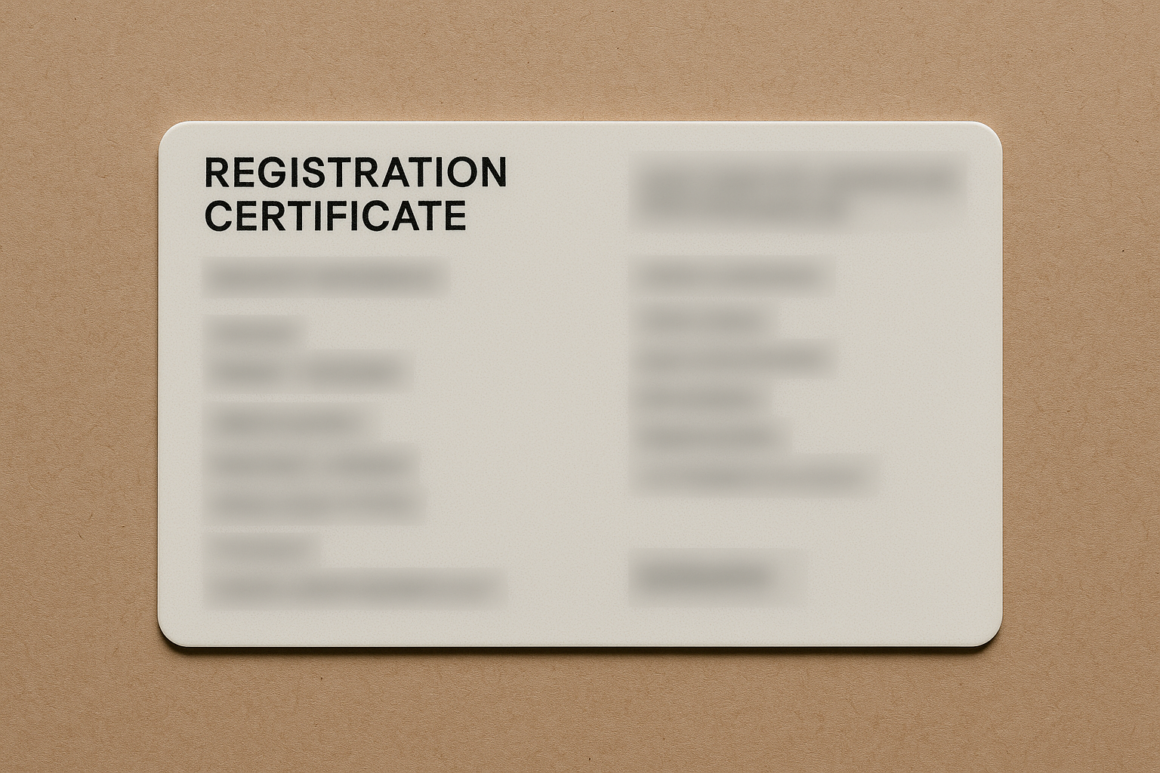
A Vehicle Registration Certificate (RC) contains all the key details needed to identify both the vehicle and its owner. Here’s what you’ll typically find:
- Vehicle Registration Number: The unique number plate assigned by the RTO
- Owner’s Name and Address: Official record of who the vehicle belongs to
- Engine Number and Chassis Number: Unique identifiers of the car’s hardware
- Fuel Type: Petrol, diesel, electric, or CNG
- Vehicle Category: Indicates private, commercial, two-wheeler, etc.
- Date of Registration and Expiry: Shows when the RC was issued and when it needs renewal
- Seating Capacity and Unladen Weight: For vehicle classification and taxation
- RTO Code: Code of the Regional Transport Office that issued the RC
- Insurance Validity: In some formats, insurance details are also printed
Each field plays a role, from helping police verify ownership to aiding in resale or insurance claims. Any mismatch in these details can cause issues during documentation, so it’s important to review the RC carefully when issued.
Types of RC in India
There are different types of Registration Certificates (RCs) issued at various stages of vehicle ownership. Understanding each type helps you manage your paperwork better and avoid legal complications.
A. Temporary RC
When you buy a new car, the dealer issues a temporary RC valid for up to 30 days. This allows you to legally use the vehicle while waiting for the permanent RC from the RTO. It’s only a provisional document and cannot be renewed.
B. Permanent RC
Once your application is processed by the RTO, you receive a permanent RC. For private vehicles, this is valid for 15 years from the date of registration. After expiry, it needs to be renewed every 5 years. Permanent RCs are mandatory for long-term ownership and all official transactions.
C. Smart Card RC (SCARD)
Many states now issue RCs in the form of smart cards, compact, tamper-proof cards with an embedded chip. These cards are easier to carry and harder to forge, and can be scanned by transport or police authorities for quick verification.
D. Digital RC
With services like DigiLocker and mParivahan, digital RCs have become the norm. These are legally accepted and convenient for travel, especially during traffic checks or emergencies. You can access them anytime via your mobile phone, reducing the need to carry physical documents.
Each version of the RC serves the same purpose, but digital and smart card formats offer added convenience and security.
Why is the RC Important?
The Registration Certificate (RC) isn’t just another car document, it’s the one that legally allows you to drive your vehicle on Indian roads. Without it, your car is considered unregistered, and driving in such a state can result in hefty fines or even vehicle seizure under Section 130 of the Motor Vehicles Act.
Here’s why the RC matters:
- It proves that the vehicle is registered in your name, making you the legal owner
- You’ll need it for any insurance claims, especially during accidents or theft
- It’s mandatory for vehicle resale or ownership transfer, and without it, no buyer will consider the transaction valid
- It is required for applying for FASTag, High-Security Registration Plates (HSRP), and vehicle loans
- It must be shown at inter-state check posts, especially if you’re relocating or driving long distances
Even during routine traffic stops, a missing RC can lead to on-the-spot penalties. Thankfully, you can now carry it digitally via apps like Digilocker or mParivahan and avoid the risks of losing or damaging the physical copy.
How to Apply for a New RC?
When you buy a new car, the vehicle dealer usually handles the RC application as part of the delivery process. But in cases where you need to apply manually, the steps are simple and straightforward.
How to apply:
- Visit your local Regional Transport Office (RTO)
- Submit Form 20 (Application for Registration of a Motor Vehicle)
- Provide the required documents (listed below)
- Pay the applicable road tax and registration fees
- Schedule a vehicle inspection at the RTO
- Once verified, the RC will be sent by post or can be collected in person
Required documents:
- Form 20
- Sales invoice from the dealer
- Valid insurance certificate
- Pollution Under Control (PUC) certificate
- Address and ID proof (Aadhaar, passport, utility bill, etc.)
- Temporary registration slip issued by the dealer
Once approved, the RTO issues a permanent RC, valid for 15 years for private vehicles. This RC serves as your vehicle’s official ID and must be kept updated and accessible.
How to Get a Duplicate RC?
If your original Registration Certificate is lost, stolen, or damaged, you’ll need to apply for a duplicate RC through either the Parivahan Sewa portal or your local RTO.
Steps to apply:
- Visit parivahan.gov.in or your nearest RTO
- Select “Apply for Duplicate RC” under vehicle-related services
- Fill in the required details and upload scanned documents
- Pay the applicable duplicate RC fee
- Submit the form and track your application status online
Documents required:
- Form 26 (application for duplicate RC)
- FIR copy (if RC is lost or stolen)
- Proof of address (Aadhaar, utility bill, etc.)
- Valid insurance certificate
- PUC certificate
The RTO typically issues the duplicate RC within 15 to 30 days, depending on the location and completeness of the application.
RC Transfer During Resale
When selling your car, transferring the Registration Certificate (RC) to the new owner is not optional, it’s legally required. Failing to do so could lead to fines or legal complications if the vehicle is misused after the sale.
Here’s how RC transfer works:
- The buyer must apply for ownership transfer at the local RTO
- Submit Form 29 and Form 30 signed by both seller and buyer
- Include supporting documents:
- Sale agreement
- Copy of valid insurance
- RC of the vehicle
- ID and address proof of the buyer
- Sale agreement
Once approved, the RTO will issue an updated RC reflecting the new owner’s name and address.
The seller should always keep a copy of the sale agreement and transfer forms as a record. This step protects you from future liabilities tied to the vehicle.
Conclusion
Your Registration Certificate (RC) is the legal identity of your car. Without it, your vehicle isn’t road-legal, and you may face penalties. From understanding the RC full form to knowing the types, uses, and how to apply, every car owner should be well-informed about this critical document.
Today, with digital options like DigiLocker and mParivahan, managing your RC is easier than ever. Whether it’s a new RC, a duplicate, or a resale transfer, staying updated ensures smooth ownership and legal peace of mind.
Make it a habit to keep your RC, physical or digital, ready and up to date.
FAQs
Q. What is RC full form in car documents?
RC stands for Registration Certificate. It confirms that your vehicle is registered with the RTO under your name.
Q. Is a digital RC valid in India?
Yes. RCs stored in DigiLocker or shown via mParivahan are legally accepted by traffic authorities across India.
Q. Can I drive without an RC?
No. Driving without an RC is a punishable offence under the Motor Vehicles Act and can result in fines or vehicle seizure.
Q. What is the cost of getting a new RC?
The cost varies by state and vehicle type but usually falls between ₹600 to ₹1500 for private vehicles.
Q. How long is an RC valid?
For private vehicles, an RC is valid for 15 years. After that, it must be renewed every 5 years.